Lights off, head on
Noah is in his first year at university. He has a statistics quiz on Thursday and an essay due Friday. At 11pm he turns the light off, and his head turns on.
The essay. The quiz. The email to his tutor he meant to send. Each one comes round, then round again, so he picks up his phone to check something. It is 12:30.
Most nights this week have gone the same way.
If this is you, you are in very ordinary company. Sleep researchers say worry about jobs you have not done yet is one of the main things that keeps people lying awake.
Five minutes with a pen
In 2018, Michael Scullin and his team at Baylor University brought 57 young adults, aged 18 to 30, into a sleep lab for one night. Before lights out, everyone wrote for five minutes.
Half wrote everything they had to remember to do tomorrow and over the next few days. The other half wrote what they had already done. Sensors on their heads then recorded the moment each person fell asleep.
Wrote what they had done
25 min
to fall asleep, on average
Wrote what they still had to do
16 min
to fall asleep, on average
The to-do group fell asleep about nine minutes faster. Within that group, the people who wrote more items, in more detail, fell asleep fastest.
The researchers think a written job stops needing to be held in your head. It has a place to wait until morning.
It was one night, with people who usually sleep well, so it is a small study. The cost of trying it is five minutes and a pen.
One line you could start without thinking
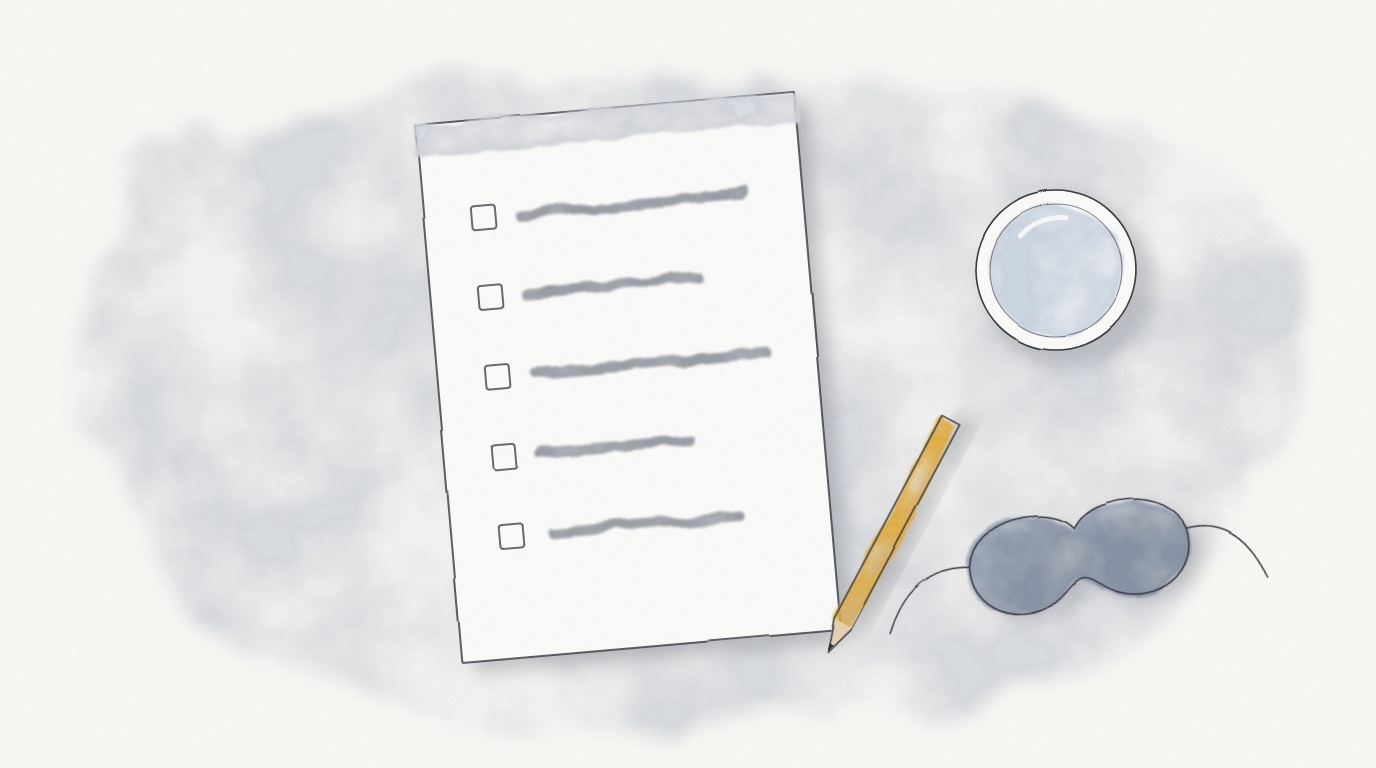
Paper and a pen by the bed. Set a timer for five minutes and write everything you have to do tomorrow and over the next few days.
Then go back over each line and make it specific. A good line tells morning you exactly what to do first, so night you can let go of it.
Make each line specific
If a new job pops up once the light is off, add it in the dark. Scrawled is fine. The point is that it is on the page, not in your head.
If you have ADHD, you may already know this move from daytime: out of your head, onto something you can see. This is the bedtime version.
Line three can wait
Noah writes nine lines. "Statistics" becomes the two questions he got wrong on Tuesday's sheet, before lunch. "Essay" becomes one messy paragraph.
Lights off. The essay drifts back into his head, and this time he knows where it is: line three, after lunch. He does not reach for his phone.
In the morning the list is already his plan. He starts with the first line.
If you are reading this in bed, find a pen and any scrap of paper. Write one line for tomorrow, make it specific, then the next one.

Plan2Ace
A pen and a scrap of paper are enough. Plan2Ace keeps the study lines for you.
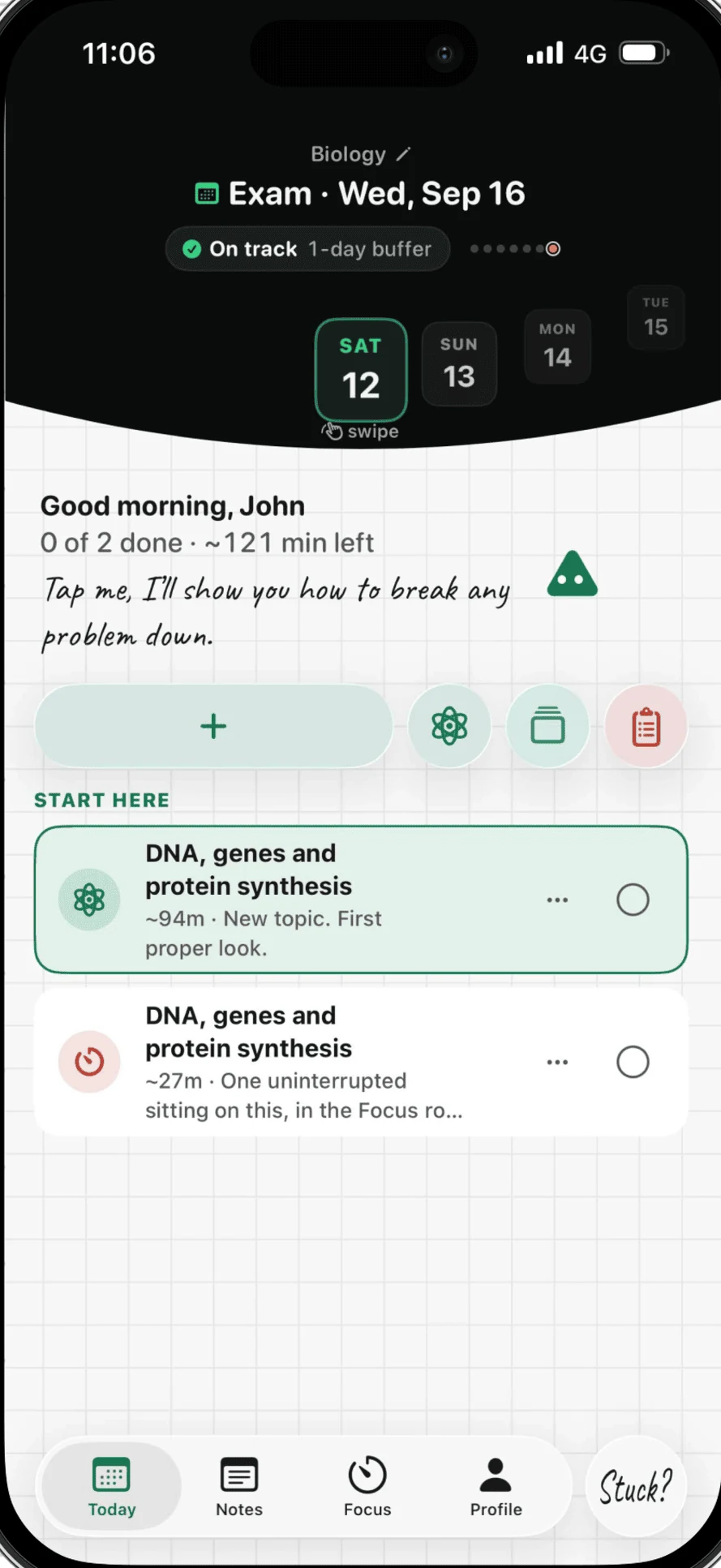
Give it your exam date and Today shows the next blocks, each with its topic and minutes. The study lines are written for you. The email to your tutor still goes on paper.
A few more questions
Can I write the list on my phone?
The students in the study wrote on paper, so paper is what was tested. It also means the phone can stay out of reach once the light is off.
When should I write it?
Last thing before lights off, once you are ready for bed. That is when the students in the study wrote theirs.
What if I lie awake most nights?
The study only included people who normally sleep well, so it says nothing about insomnia. If sleep is hard most nights for weeks, talk to a doctor or your school or university health service.
Got five minutes?
Pen, paper, tomorrow's list, one specific line at a time. Or let Plan2Ace hold the study part. Free to start.
Download on theApp StoreiPhone, iOS 26.5 or later