Twenty pages, then nothing
Leo is in Year 12 with a biology test on Thursday. Tonight is chapter 6, the ear, twenty pages. He reads every line and highlights as he goes.
At the end he shuts the book and tries to say what the cochlea does. He read that page twenty minutes ago. It is gone.
So he reads the chapter again. The second time it feels familiar, and familiar feels like learning. Ten minutes later, the cochlea is gone again.
Leo is not a slow reader. Reading start to finish is just the weaker way in, whoever is doing the reading.
Guess before you read
In 2009, Lindsey Richland and Liche Kao at the University of California, Irvine and Nate Kornell at Williams College tested a small change. They gave 63 university students a two page science essay about vision.
Half read it for ten minutes. The other half first had two minutes to answer five questions about it, then read for eight. Those students got 95% of the questions wrong, because they had not read it yet.
Read for ten minutes
56%
right on the final test
Guess for two, read for eight
75%
right, counting only questions they first got wrong
A week later, in a bigger group of 158 students, the guessers were still ahead. Reading the questions first helped too. Trying to answer them helped more.
The boost only went to the questions they tried. Facts nobody asked them about did no better and no worse, so the questions you pick matter.
The researchers think a failed try gets you ready for the answer. When it turns up on page 9, it lands somewhere.
Two minutes of wrong answers
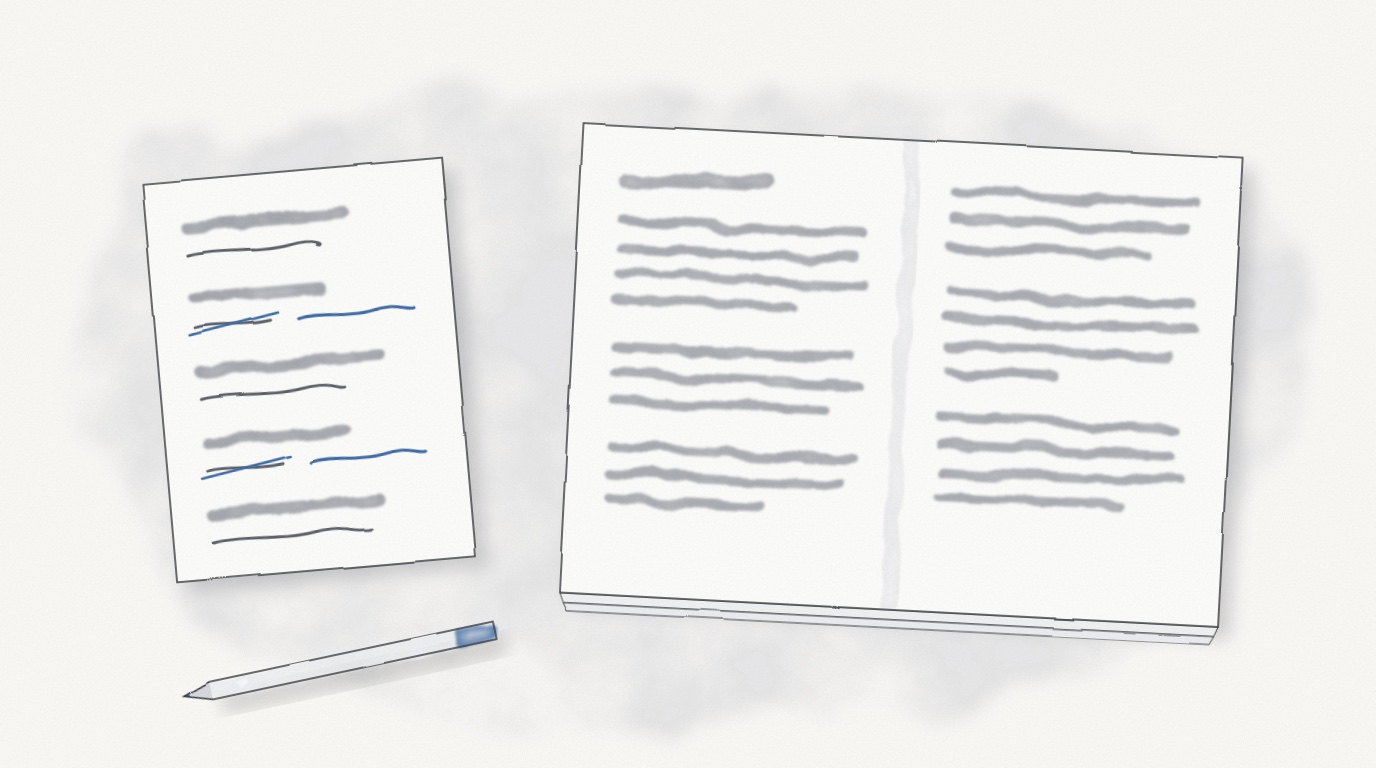
Before chapter 7, the eye, Leo looks for the questions at the end of it. No questions? He turns four or five headings into questions, so "Rods" becomes "What do rods do?"
He writes a guess under each one, book shut, two minutes. A wild guess counts. A blank does not.
Then he reads as usual and fixes each guess in blue when he meets the answer.
If long reading loses you, the guesses give the pages a job. You are hunting for five answers, not getting through twenty pages.
Five answers by the last page
Leo had guessed that rods see colour. On page 4 he found it is the other way round: rods work in dim light and cones see colour. He crossed out his guess and wrote the fix next to it.
At the end he shut the book and went through his five questions. Four came back, the rods one first.
On Thursday the test asked which cells see colour. He wrote it in one go, the right way round.
Tonight, open the chapter you read next. Turn its first heading into a question and write one guess. Four more, then read.

Plan2Ace
A pen and the chapter are enough. Plan2Ace asks the questions for you.
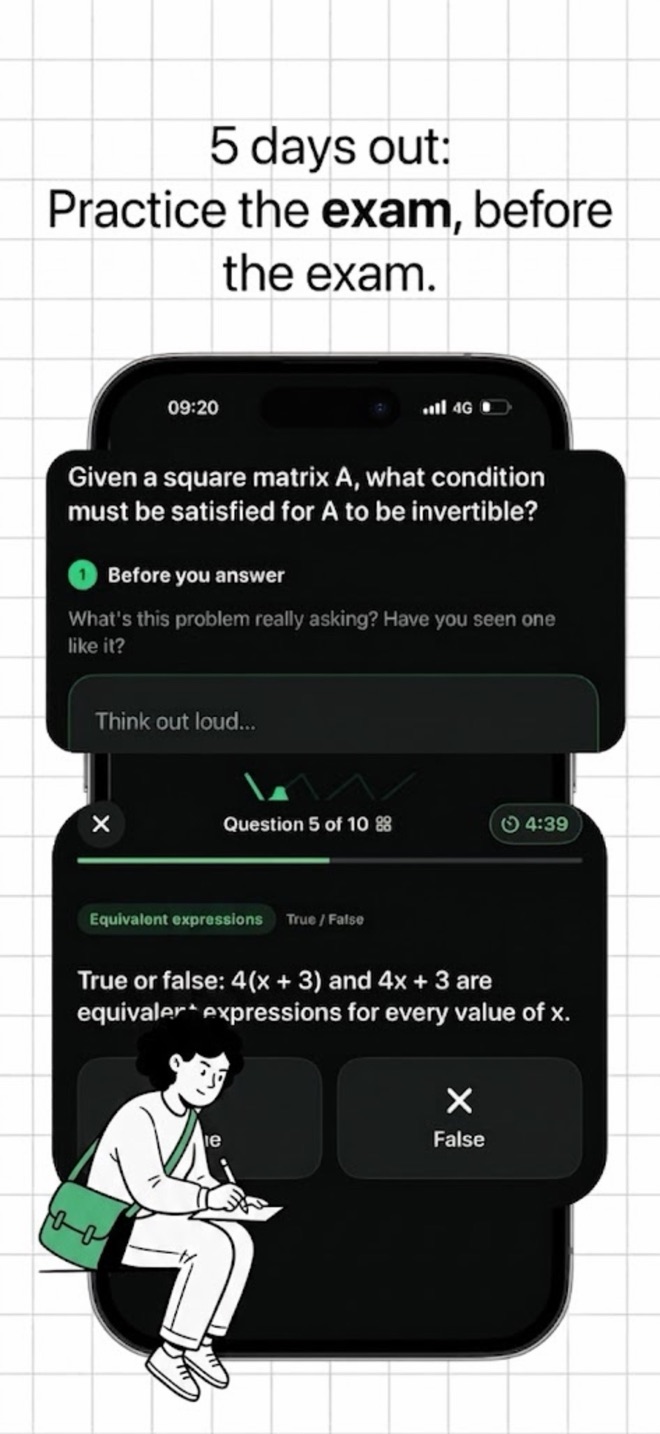
Exam practice asks timed questions with nothing to peek at, then Ace teaches through the gaps you hit. Prefer the questions at the end of the chapter? The method is the point.
A few more questions
Will a wrong guess stick instead of the right answer?
Not if you meet the right answer soon after. In the study almost every guess was wrong, and the right answers still stuck better. Fix each guess as you read, so the right one is the last thing you wrote.
Does this work for maths?
The study used a science reading with short factual answers, so that is where the evidence is. For maths, the nearest version is trying the first example before you read the worked solution, but this study did not test that.
Can I use past paper questions?
Yes, if they are about this chapter. They ask what the test will ask, and only the questions you try get the boost, so they are a good place to start.
Got two minutes?
Find five questions in your next chapter and guess them before you read. Or let Plan2Ace ask. Free to start.
Download on theApp StoreiPhone, iOS 26.5 or later