Twelve out of twelve
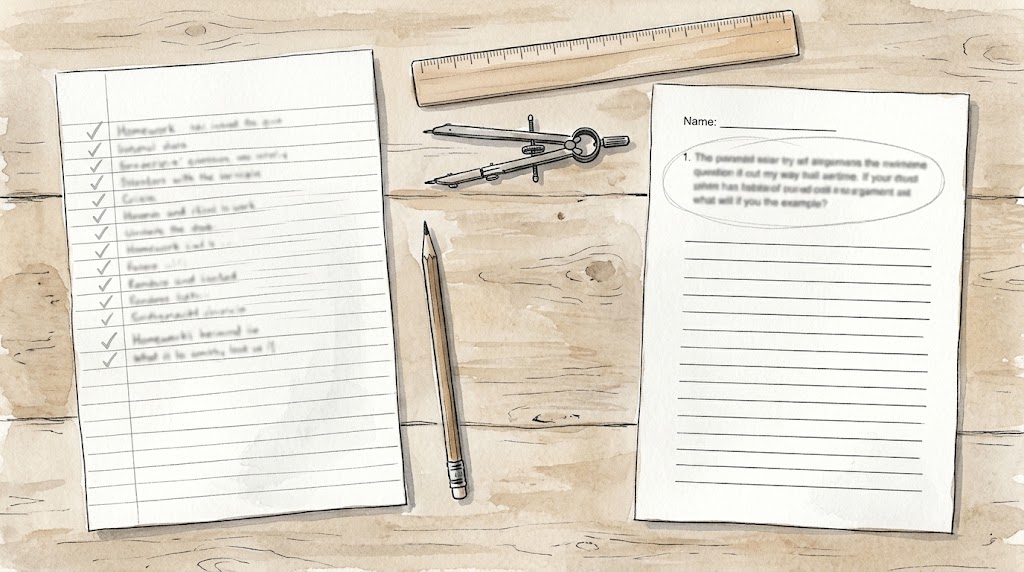
Sam is in Year 10. On Tuesday the class learned Pythagoras, and that night Sam got all twelve homework questions right. Wednesday was area of circles. Twelve more, all right.
On Friday the test starts with a ladder leaning on a wall. Sam knows every topic on the paper and still sits there, pen still, not sure where to begin.
It feels like the week vanished overnight, but Sam learned every method. What Sam never practised was picking one.
The sheet gave it away
Every question on Tuesday's sheet used Pythagoras. Sam knew the method before reading a word, so the only job was to use it.
The test mixes the topics. Each question now hides its method, and choosing it is a separate skill.
Homework
You know the method before you read
The test
You have to pick it first
In 2015, Doug Rohrer and colleagues at the University of South Florida tested this with 126 maths students aged twelve and thirteen. For three months everyone did the same practice questions. Half got them grouped by topic, half got them mixed.
A month later came a surprise test. The mixed group scored 74%. The grouped group scored 42%.
Grouped practice feels better, which is why it is everywhere. In a 2008 study at UCLA, people learned to tell painters apart better from mixed paintings. Most still said grouping had worked better, even after their own results showed the opposite.
Shuffle the sheet
Use questions you have already done, in a new order. Copy each one onto a scrap of paper, turn the scraps face down and shuffle them.
Step three is the one homework skipped. Writing "Pythagoras" or "area" at the top forces the choice that Friday's test will ask for.
Expect it to feel slower and shakier than homework. That wobble is the choosing, the part the grouped sheets never gave you.
If you have ADHD, the mix can help. Every question is a small new puzzle instead of the twelfth copy of the same one.
Six questions on Sunday
Sam tried it on Sunday with six questions from the last three weeks. Question four looked like Pythagoras and turned out to be area. Sam caught it at the naming step, before writing a single line of working.
That was Friday's freeze again, only this time at the desk, with no marks at stake and time to fix it. Four of the six names were right. The two misses went on a sticky note for Monday's mix.
Tonight, open your last three homework sheets and copy out two questions from each, mixed up. You have solved every one of them before.
Then write the method's name above all six before you solve any. If that is all you do tonight, it still counts.

Plan2Ace
Old homework and a pen are enough. Plan2Ace does the asking for you.
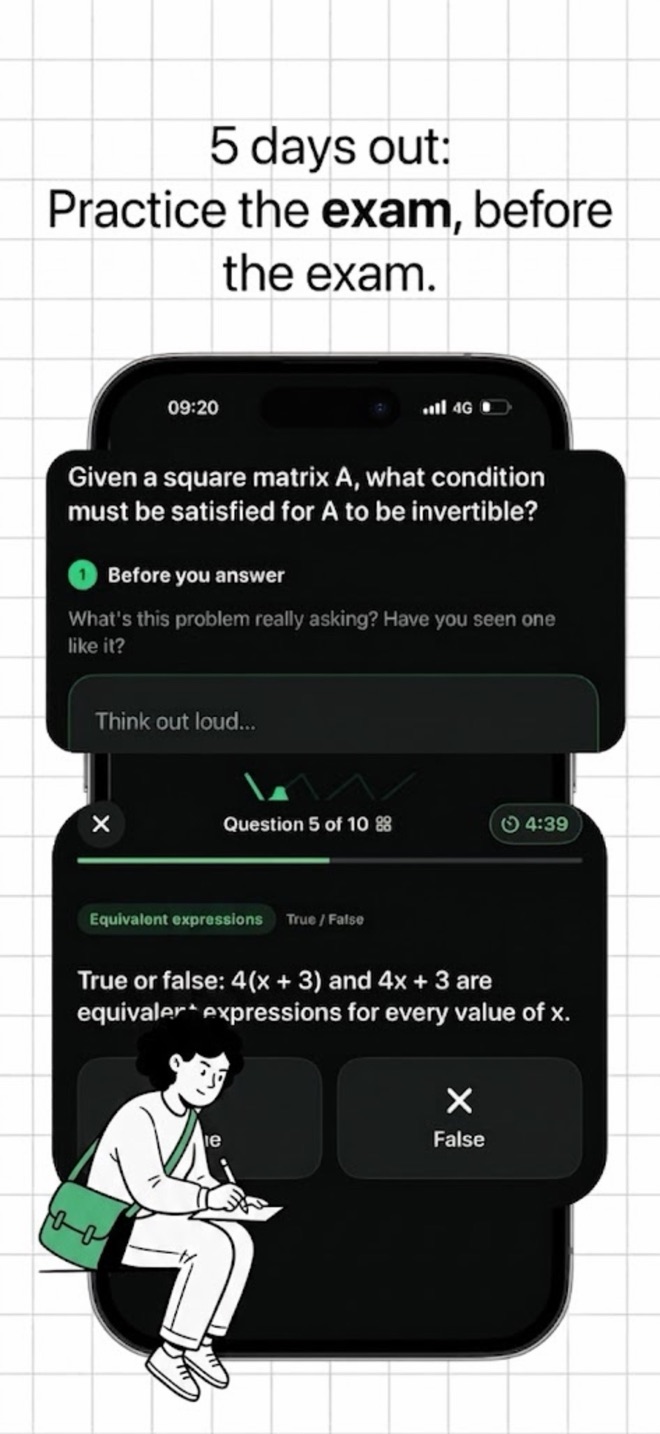
Exam practice gives you timed questions with nothing to peek at, and asks what each problem is really about before you answer. The same naming step, built in. Rather use your old homework? The method is the point.
A few more questions
Should I stop doing homework in order?
No. Do homework the way it is set, because grouped questions are a good way to learn a new method. Mix things up when you practise for a test.
Can I do this with flashcards?
Yes. Shuffle cards from two or three topics into one pile instead of going through one topic at a time. Before you flip a card, say which topic it comes from.
How many topics should I mix?
Two or three you have already learned. Mixing is for practising, so leave out anything you have not met yet.
Got ten minutes?
Six old questions, shuffled, named before you solve. Or let Plan2Ace ask. Free to start.
Download on theApp StoreiPhone, iOS 26.5 or later